University Southern California Trojans
Photo by: John McGillen
Q&A with Head Coach Eric Musselman
June 26, 2026 | Men's Basketball
LOS ANGELES — With a talented mix of returners, transfers and blue-chip freshman recruits, the USC Men's Basketball team is looking to make the NCAA Tournament in Head Coach Eric Musselman's third year. Musselman sat down to talk about the transfer portal, the NCAA's new five-in-five eligibility rule, NBA Draft and expectations for the season.
This is year three for you at USC after having quite the coaching career in the NBA, the G-League and now coaching in college. How have you grown as a coach and as a person over the last three years and what's this journey been like for you?
When I look back on my career, I wanted to follow in my dad's footsteps by coaching in the NBA, coaching in college, and taking teams to NCAA tournaments. From that aspect, I feel like if he's been watching us, he would be proud of what we've done thus far. But I know that we have a lot more to go.
These three years at USC have been great. It's been a great learning experience. I knew being the first USC men's basketball coach to coach in the Big Ten would be challenging for the first two or three years. As a new program in a league that has historically been phenomenal with hall of fame coaches, I don't think anyone on our staff thought that this was going to be easy. But that's what you want. You want to go against the best and you want to be the best. So I think that the future for USC basketball is looking really good right now.
We still have a lot of areas we have to improve in, but we felt like last year in year two, we were much better than where we were in year one. We've had some unfortunate injuries, but at one point, we were 18-6, which gets forgotten way too often. A team can't overcome losing a player who averaged 20 points and six assists per game. You can maybe overcome it for eight or nine games, but no team in the country can lose a guy averaging 20 and 6 and not feel it at some point.
This year, we feel like this is our best team. It's a team that's got size, depth, experience, and McDonald's All-Americans on it, so I think we should be excited. But in our league, for instance, Illinois is bringing basically everybody back from a team that had the best offense in all of college basketball. I think that if you look over a 10-to-30 year period, the Big Ten is the premier conference for football and basketball.
It was announced earlier this week that the NCAA will be implementing a 5-in-5 eligibility rule, which states that student-athletes will have a maximum of five years to play five seasons. What are your thoughts on this change and how do you think that's going to impact recruiting and roster building for you?
I think the good thing about the 5-in-5 is that it will provide clarity for players, coaching staffs, and front office staffs. Hopefully, it helps in all sports so that we're not living in a gray area regarding eligibility.
I think from a roster management standpoint, anytime there's a rule change or rule clarity, you have to adjust. You can't just stay status quo if there's a new rule. Rules have changed, so your philosophy is going to have to be tweaked. I do think that in future years, there will be a large group of players that you didn't foresee playing a fifth year. So experience is certainly going to be a factor in how you build your roster.
I think teams have been roster-building year-by-year with a lot of transfers, and I think that maybe this rule will help us have more retention across the board in all sports.
Speaking of transfers, your teams at Nevada were on the cutting edge of using the transfer portal, even back when players had to sit out a year after transferring. Obviously, you've kept that roster-building philosophy of recruiting the transfer portal here at USC. What made you decide to commit to that roster-building philosophy, and how have you noticed it change over the years?
When we got the job at Nevada, we had a philosophy of having nine active players. Then we tried having four transfer players sit out, and then the following year, those sit-outs would all be in our top six-man rotation. We felt like, from a competitive standpoint in practice, almost every year, the guys who sat out beat the current team, which is how we got better and better.
We got to the point where there had never been a McDonald's All-American or a high school all-American recruited at Nevada in any sport. Once we recruited the portal well, we were then able to recruit a McDonald's All-American.
In year one at Arkansas, we felt there were two really talented players in Mason Jones and Isaiah Joe. It was super important that we retained those two guys, which we did, and they ended up both being future NBA players.
Now, in the Big Ten, you have to have NBA players to win. At Nevada, we had NBA draft picks and guys that went on to play in the NBA, then at Arkansas, we had the first one-and-dones ever at a very historic program. They had never even had a lottery pick before.
We feel like we're going to have multiple guys that put on an NBA uniform on this year's roster, which is a change from where we've been in years one and two. I can pretty much guarantee we're going to have at least one guy get drafted. But that's what happens when you're building a program: You're learning a new conference, your campus and your academic culture all before you build. Hopefully this is the year that we turn the corner.
Earlier this week, six Big Ten players got drafted in the first round of the NBA Draft and most of them were bigs. In college this past year, size, athleticism and having dynamic big men were important. Yet also, the New York Knicks won the NBA Finals with a small guard in Jalen Brunson, who was the Finals MVP. Where do you think the direction of basketball is going, and what do you think is gonna be the key for roster building over the next couple of years?
I don't think there's a direct answer. Jalen Brunson became the playoff MVP as a second-round draft pick who got traded. But he's gotten better through time, and New York was able to assemble the right talent around him.
But the Big Ten, historically, has been a big league. It's been a big, physical league all the way back in the 1970s when my dad was coaching in Minnesota and had a front line of three guys who were 6-foot-9 or taller in the starting lineup with Mychal Thompson, Mark Olberding and Mark Landsberger. He won a Big Ten championship because he got NBA players, and not just one, but a multitude of NBA players.
I look back at our past really good teams where players like Caleb and Cody Martin led the way, and went on to have good NBA careers. Or guys like Anthony Black, Nick Smith, Jordan Walsh, Moses Moody, or Jaylin Williams. When you have that level of talent, regardless of position, all different positions can help you win at the collegiate level. I don't think there's a clear-cut formula.
In college, you're recruiting, not drafting, so you have to identify 10 great players that can fit the puzzle perfectly. We have to find out if they can get into school and if they can fit into the academic culture. Do they want to come to LA? Do they want to play in the Big Ten? And then there's a little bit of luck involved as well — especially in the portal era. Maybe a guy has a high ceiling, explodes in the year that you get him and turns himself into a much better player than you could have envisioned. That does happen too.
Also, this week, we showed our team that 25 of the 30 players who got drafted in the first round played in the NCAA Tournament at some point in their careers. If you can't help your college team win at a high level, how are you going to help an NBA team win at a high level? Obviously, there are guys like Ben Simmons and Anthony Edwards who never play in the NCAA Tournament, but for the most part, that's a pretty good rule of thumb. I cannot remember a draft where that hasn't been the case. If good things happen while you're in college, that makes a huge impact on whether you get drafted.
What were some of the key traits that you were looking for when you were piecing together this year's roster?
We're super excited to get three dynamic freshmen with incredible upside. We feel that Eric Reibe and KJ Lewis will be great additions alongside our three returners and the freshmen. In a small sample size of summer practices, Isaac Bruns, Joshua Hughes and Jadis Jones have really done a good job of fitting in and finding the roles we envisioned them having.
With Jalen Cox, because of the injuries that we've had over the eight weeks of summer practice, he's had an opportunity to get a lot of reps at that point guard position. He's become much more comfortable with our play calls and our schemes.
One of the goals this summer is figuring out the team's identity and who's going to step up and lead. What traits stand out to you about this group in the limited sample size of practice so far?
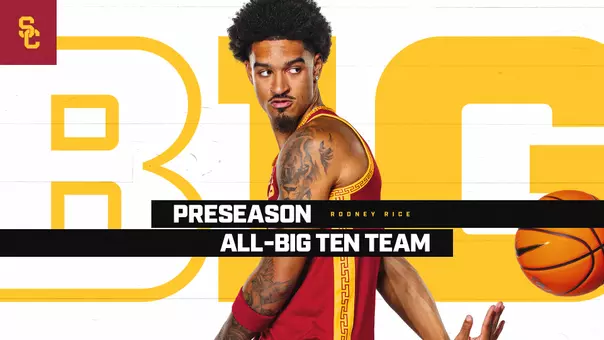
We're super excited with the leadership that Rodney Rice and Jacob Cofie have provided. Both of them have stepped up on the floor, but more importantly, they've stepped up from a leadership standpoint. That's been great to see.
As for Alijah Arenas' growth, he got a real taste of what it takes to be successful in the Big Ten last year, which was good for him because he could have spent last year in high school. Instead, he got the benefit of practicing, playing and observing Big Ten basketball, and he's much further ahead today than he would have been coming in as a freshman. He understands the expectations and our schemes, so we hope that it really benefits him.
From an identity standpoint, we're far from creating an identity because we've practiced without Eric Reibe, KJ Lewis and Aaron Hunkin-Claytor. Our identity is going to be evolving all the way through November.
What parts of the team's personalities and off-the-floor traits do you appreciate?
The biggest thing that we appreciate is their team bonding away from the coaches. They've been organizing a lot of stuff amongst themselves. When we get together on Mondays and ask them what they did together as a team over the weekend, we've been very impressed with their organization and decision to collectively do stuff together. Oftentimes, you see a group of four or six guys on a team do something together. It's very seldom that 13 people are doing things together only three weeks into meeting each other. That's been the most impressive thing thus far.
This is year three for you at USC after having quite the coaching career in the NBA, the G-League and now coaching in college. How have you grown as a coach and as a person over the last three years and what's this journey been like for you?
When I look back on my career, I wanted to follow in my dad's footsteps by coaching in the NBA, coaching in college, and taking teams to NCAA tournaments. From that aspect, I feel like if he's been watching us, he would be proud of what we've done thus far. But I know that we have a lot more to go.
These three years at USC have been great. It's been a great learning experience. I knew being the first USC men's basketball coach to coach in the Big Ten would be challenging for the first two or three years. As a new program in a league that has historically been phenomenal with hall of fame coaches, I don't think anyone on our staff thought that this was going to be easy. But that's what you want. You want to go against the best and you want to be the best. So I think that the future for USC basketball is looking really good right now.
We still have a lot of areas we have to improve in, but we felt like last year in year two, we were much better than where we were in year one. We've had some unfortunate injuries, but at one point, we were 18-6, which gets forgotten way too often. A team can't overcome losing a player who averaged 20 points and six assists per game. You can maybe overcome it for eight or nine games, but no team in the country can lose a guy averaging 20 and 6 and not feel it at some point.
This year, we feel like this is our best team. It's a team that's got size, depth, experience, and McDonald's All-Americans on it, so I think we should be excited. But in our league, for instance, Illinois is bringing basically everybody back from a team that had the best offense in all of college basketball. I think that if you look over a 10-to-30 year period, the Big Ten is the premier conference for football and basketball.
It was announced earlier this week that the NCAA will be implementing a 5-in-5 eligibility rule, which states that student-athletes will have a maximum of five years to play five seasons. What are your thoughts on this change and how do you think that's going to impact recruiting and roster building for you?
I think the good thing about the 5-in-5 is that it will provide clarity for players, coaching staffs, and front office staffs. Hopefully, it helps in all sports so that we're not living in a gray area regarding eligibility.
I think from a roster management standpoint, anytime there's a rule change or rule clarity, you have to adjust. You can't just stay status quo if there's a new rule. Rules have changed, so your philosophy is going to have to be tweaked. I do think that in future years, there will be a large group of players that you didn't foresee playing a fifth year. So experience is certainly going to be a factor in how you build your roster.
I think teams have been roster-building year-by-year with a lot of transfers, and I think that maybe this rule will help us have more retention across the board in all sports.
Speaking of transfers, your teams at Nevada were on the cutting edge of using the transfer portal, even back when players had to sit out a year after transferring. Obviously, you've kept that roster-building philosophy of recruiting the transfer portal here at USC. What made you decide to commit to that roster-building philosophy, and how have you noticed it change over the years?
When we got the job at Nevada, we had a philosophy of having nine active players. Then we tried having four transfer players sit out, and then the following year, those sit-outs would all be in our top six-man rotation. We felt like, from a competitive standpoint in practice, almost every year, the guys who sat out beat the current team, which is how we got better and better.
We got to the point where there had never been a McDonald's All-American or a high school all-American recruited at Nevada in any sport. Once we recruited the portal well, we were then able to recruit a McDonald's All-American.
In year one at Arkansas, we felt there were two really talented players in Mason Jones and Isaiah Joe. It was super important that we retained those two guys, which we did, and they ended up both being future NBA players.
Now, in the Big Ten, you have to have NBA players to win. At Nevada, we had NBA draft picks and guys that went on to play in the NBA, then at Arkansas, we had the first one-and-dones ever at a very historic program. They had never even had a lottery pick before.
We feel like we're going to have multiple guys that put on an NBA uniform on this year's roster, which is a change from where we've been in years one and two. I can pretty much guarantee we're going to have at least one guy get drafted. But that's what happens when you're building a program: You're learning a new conference, your campus and your academic culture all before you build. Hopefully this is the year that we turn the corner.
Earlier this week, six Big Ten players got drafted in the first round of the NBA Draft and most of them were bigs. In college this past year, size, athleticism and having dynamic big men were important. Yet also, the New York Knicks won the NBA Finals with a small guard in Jalen Brunson, who was the Finals MVP. Where do you think the direction of basketball is going, and what do you think is gonna be the key for roster building over the next couple of years?
I don't think there's a direct answer. Jalen Brunson became the playoff MVP as a second-round draft pick who got traded. But he's gotten better through time, and New York was able to assemble the right talent around him.
But the Big Ten, historically, has been a big league. It's been a big, physical league all the way back in the 1970s when my dad was coaching in Minnesota and had a front line of three guys who were 6-foot-9 or taller in the starting lineup with Mychal Thompson, Mark Olberding and Mark Landsberger. He won a Big Ten championship because he got NBA players, and not just one, but a multitude of NBA players.
I look back at our past really good teams where players like Caleb and Cody Martin led the way, and went on to have good NBA careers. Or guys like Anthony Black, Nick Smith, Jordan Walsh, Moses Moody, or Jaylin Williams. When you have that level of talent, regardless of position, all different positions can help you win at the collegiate level. I don't think there's a clear-cut formula.
In college, you're recruiting, not drafting, so you have to identify 10 great players that can fit the puzzle perfectly. We have to find out if they can get into school and if they can fit into the academic culture. Do they want to come to LA? Do they want to play in the Big Ten? And then there's a little bit of luck involved as well — especially in the portal era. Maybe a guy has a high ceiling, explodes in the year that you get him and turns himself into a much better player than you could have envisioned. That does happen too.
Also, this week, we showed our team that 25 of the 30 players who got drafted in the first round played in the NCAA Tournament at some point in their careers. If you can't help your college team win at a high level, how are you going to help an NBA team win at a high level? Obviously, there are guys like Ben Simmons and Anthony Edwards who never play in the NCAA Tournament, but for the most part, that's a pretty good rule of thumb. I cannot remember a draft where that hasn't been the case. If good things happen while you're in college, that makes a huge impact on whether you get drafted.
What were some of the key traits that you were looking for when you were piecing together this year's roster?
We're super excited to get three dynamic freshmen with incredible upside. We feel that Eric Reibe and KJ Lewis will be great additions alongside our three returners and the freshmen. In a small sample size of summer practices, Isaac Bruns, Joshua Hughes and Jadis Jones have really done a good job of fitting in and finding the roles we envisioned them having.
With Jalen Cox, because of the injuries that we've had over the eight weeks of summer practice, he's had an opportunity to get a lot of reps at that point guard position. He's become much more comfortable with our play calls and our schemes.
One of the goals this summer is figuring out the team's identity and who's going to step up and lead. What traits stand out to you about this group in the limited sample size of practice so far?
We're super excited with the leadership that Rodney Rice and Jacob Cofie have provided. Both of them have stepped up on the floor, but more importantly, they've stepped up from a leadership standpoint. That's been great to see.
As for Alijah Arenas' growth, he got a real taste of what it takes to be successful in the Big Ten last year, which was good for him because he could have spent last year in high school. Instead, he got the benefit of practicing, playing and observing Big Ten basketball, and he's much further ahead today than he would have been coming in as a freshman. He understands the expectations and our schemes, so we hope that it really benefits him.
From an identity standpoint, we're far from creating an identity because we've practiced without Eric Reibe, KJ Lewis and Aaron Hunkin-Claytor. Our identity is going to be evolving all the way through November.
What parts of the team's personalities and off-the-floor traits do you appreciate?
The biggest thing that we appreciate is their team bonding away from the coaches. They've been organizing a lot of stuff amongst themselves. When we get together on Mondays and ask them what they did together as a team over the weekend, we've been very impressed with their organization and decision to collectively do stuff together. Oftentimes, you see a group of four or six guys on a team do something together. It's very seldom that 13 people are doing things together only three weeks into meeting each other. That's been the most impressive thing thus far.
Players Mentioned
G
/ Men's Basketball
G
/ Men's Basketball
F
/ Men's Basketball
G
/ Men's Basketball
F
/ Men's Basketball
G
/ Men's Basketball
G
/ Men's Basketball
G
/ Men's Basketball
C
/ Men's Basketball
G
/ Men's BasketballSaturday, October 10
Thursday, October 08
Wednesday, September 16
Monday, June 22