University Southern California Trojans
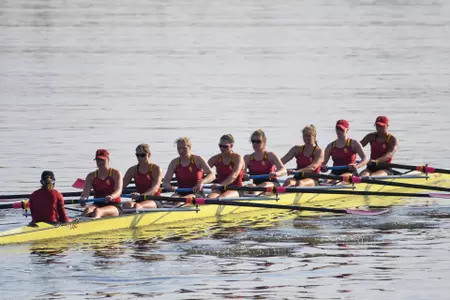
Stevens Center Academic Spotlight: Chloe Chrysikopoulos
September 28, 2017 | Women's Rowing, Student-Athlete Academic Services, USC Ripsit Blog, Features
USC's student-athletes are more than just champions on the field, court, diamond and pool -- they're champions in the classroom as well. Each week, we will get to know one of these scholarly Trojans a bit better in our academic spotlight.
 Name: Chloe Chrysikopoulos
Class: Junior
Sport: Women's Rowing
Major: Master's in Sports Journalism (already received Bachelor's degree in theatre)
GPA: 3.79
Aubrey Kragen (AK): When did you first become interested in studying theatre?
Chloe Chrysikopoulos (CC): It was just a summer camp thing, like what to do over the summer — my mom put me in theatre camps, and I just developed a passion for it. I did it all throughout middle school and high school. I wanted to apply to USC became it was my mom's alma mater, and I knew they had a great program. I didn't really know what I wanted to do; I thought about history, I thought about pre-med. But then I came to orientation and realized, 'I want to study theatre.' So I enrolled in all those classes, and that's how it started.
AK: What was it like being a theatre student? How would you compare the classes, homework load and time commitments to a more traditional academic major?
CC: It's definitely different. I lived with a business major my freshman year, an engineering major my sophomore year and a comp sci major my junior year, and my classes and my homework was so different from theirs. There is the typical essay writing, and reading plays, doing analysis, but most of the homework is acting and rehearsing outside of class, meeting with your classmates, memorizing your lines. My comp sci roommate last year had to read lines with me, she had to film me. It's fun, but it also has its own challenges, and the time commitment is pretty difficult — especially when everyone has different schedules and sometimes you can't meet until 10 p.m. at night. That was always difficult because with rowing we had such early morning practices.
AK: Did you always know that you were interested in sports journalism?
CC: I was never really thrilled with being a theatre major. I liked what I was doing, but I didn't love it. I definitely liked it more when I got into the upper level classes where you can do camera work, whereas most of the lower level stuff is acting in plays and live stuff. My mom always pushed me to do journalism, because I really like to write and she was actually a journalism major as well. At first I thought, 'No, I want to do my own thing.' But I found my passion for theatre was not there, so I thought, 'Maybe my mom kind of knows what's going on.' I took a few journalism classes and I really liked the program. And then sports made sense because I spend so much time rowing, my mom loves football, I love tennis as well — it just made more sense to go into sports than politics or news or anything like that.
AK: Is it difficult at all to pursue a Master's degree in a field that's so unrelated to what you studied during your undergraduate days?
CC: I don't think so. I think it's more of a mental fear of not having any experience. But I'm in a grad class called '21st Century Sports Storytelling' and none of the students have any journalism experience. But for the most part, it really doesn't matter. But I didn't realize that Master's classes require so much more time outside of class than a typical undergrad class. They expect more from you and they understand that you have a car to take you places and that this is what you want to do with your life, so they want you to go out and do it. So for my grad class, I had to be a team reporter for a team, and I chose a high school football team in Long Beach ... But an undergrad class could never require that of a student because of all the logistical things, time commitments and you just wouldn't expect a 20-year-old to be able to handle that. But most people in my class are adults. I think that was a big surprise for me.
AK: Do you think your experience as a student-athlete gives you special insight into what kind of questions to ask to the athletes you might interview?
CC: I think it definitely helps. It helps me think about what they're going through, how to frame the question and how I would feel in that situation. Or, if I were being interviewed, how I would want to be treated.
AK: Career-wise, is there a specific company you'd like to work for or a path within the field of sports journalism that you'd like to follow?
CC: I would be happy with anything, but I think there's most stability working with a certain team, just because there have been so many layoffs recently at FOX and ESPN. But I feel like if you're a team reporter and working closely with a team, you're probably more likely to have a more stable job than if you're at a network where your show might get cut the next day.
Name: Chloe ChrysikopoulosClass: Junior
Sport: Women's Rowing
Major: Master's in Sports Journalism (already received Bachelor's degree in theatre)
GPA: 3.79
Aubrey Kragen (AK): When did you first become interested in studying theatre?
Chloe Chrysikopoulos (CC): It was just a summer camp thing, like what to do over the summer — my mom put me in theatre camps, and I just developed a passion for it. I did it all throughout middle school and high school. I wanted to apply to USC became it was my mom's alma mater, and I knew they had a great program. I didn't really know what I wanted to do; I thought about history, I thought about pre-med. But then I came to orientation and realized, 'I want to study theatre.' So I enrolled in all those classes, and that's how it started.
AK: What was it like being a theatre student? How would you compare the classes, homework load and time commitments to a more traditional academic major?
CC: It's definitely different. I lived with a business major my freshman year, an engineering major my sophomore year and a comp sci major my junior year, and my classes and my homework was so different from theirs. There is the typical essay writing, and reading plays, doing analysis, but most of the homework is acting and rehearsing outside of class, meeting with your classmates, memorizing your lines. My comp sci roommate last year had to read lines with me, she had to film me. It's fun, but it also has its own challenges, and the time commitment is pretty difficult — especially when everyone has different schedules and sometimes you can't meet until 10 p.m. at night. That was always difficult because with rowing we had such early morning practices.
AK: Did you always know that you were interested in sports journalism?
CC: I was never really thrilled with being a theatre major. I liked what I was doing, but I didn't love it. I definitely liked it more when I got into the upper level classes where you can do camera work, whereas most of the lower level stuff is acting in plays and live stuff. My mom always pushed me to do journalism, because I really like to write and she was actually a journalism major as well. At first I thought, 'No, I want to do my own thing.' But I found my passion for theatre was not there, so I thought, 'Maybe my mom kind of knows what's going on.' I took a few journalism classes and I really liked the program. And then sports made sense because I spend so much time rowing, my mom loves football, I love tennis as well — it just made more sense to go into sports than politics or news or anything like that.
AK: Is it difficult at all to pursue a Master's degree in a field that's so unrelated to what you studied during your undergraduate days?
CC: I don't think so. I think it's more of a mental fear of not having any experience. But I'm in a grad class called '21st Century Sports Storytelling' and none of the students have any journalism experience. But for the most part, it really doesn't matter. But I didn't realize that Master's classes require so much more time outside of class than a typical undergrad class. They expect more from you and they understand that you have a car to take you places and that this is what you want to do with your life, so they want you to go out and do it. So for my grad class, I had to be a team reporter for a team, and I chose a high school football team in Long Beach ... But an undergrad class could never require that of a student because of all the logistical things, time commitments and you just wouldn't expect a 20-year-old to be able to handle that. But most people in my class are adults. I think that was a big surprise for me.
AK: Do you think your experience as a student-athlete gives you special insight into what kind of questions to ask to the athletes you might interview?
CC: I think it definitely helps. It helps me think about what they're going through, how to frame the question and how I would feel in that situation. Or, if I were being interviewed, how I would want to be treated.
AK: Career-wise, is there a specific company you'd like to work for or a path within the field of sports journalism that you'd like to follow?
CC: I would be happy with anything, but I think there's most stability working with a certain team, just because there have been so many layoffs recently at FOX and ESPN. But I feel like if you're a team reporter and working closely with a team, you're probably more likely to have a more stable job than if you're at a network where your show might get cut the next day.


Players Mentioned

Coxswain
/ Women's RowingWednesday, October 07
Wednesday, October 07
Wednesday, October 07
Tuesday, October 06