University Southern California Trojans
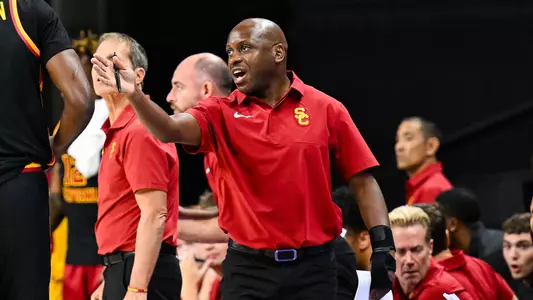
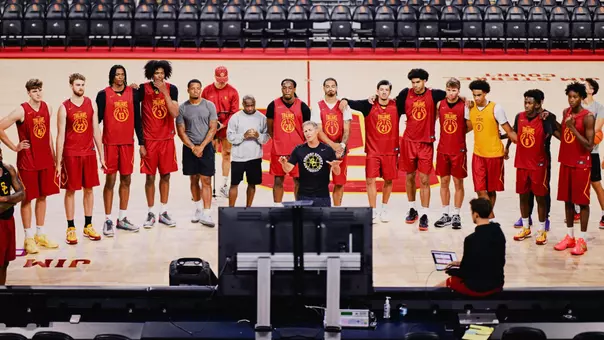
Photo by: John McGillen
Q&A with Assistant Coach Earl Boykins
June 25, 2026 | Men's Basketball
LOS ANGELES — With a talented mix of returners, transfers and blue-chip freshman recruits, the USC Men's Basketball team is looking to make the NCAA Tournament in Head Coach Eric Musselman's third year. Assistant Coach Earl Boykins, who is entering his second season on staff with the Trojans, sat down to share his NBA experience, how he's developed as a coach and his thoughts about the team.
I want to start by talking about your 13 years in the NBA for 10 different teams, including a few teams coached by Eric Musselman. What was the journey like for you to go from an undrafted player to being one of the most respected veterans in the league?
It was interesting, to say the least. When I was in college, I was leading in the country and scoring. I thought I was going to be drafted, but when I went undrafted, I had to prove myself all over again.
My draft year was a lockout year, so there was no summer league. And so I ended up playing in the Continental Basketball Association. When I was in the CBA, the interesting part was I didn't play much. I was getting DNPs and we only had 10 guys on the roster.
Once the lockout ended, I tried out for the New Jersey Nets. I ended up being the only player from my CBA team who made the NBA. I was with the Nets for about two months, then they released me. I went back to the CBA for about two or three weeks, then the Cleveland Cavaliers picked me up — all in my first year. It was unusual because I didn't practice at all. In the lockout year, we played 50 games in 90 days. I really didn't learn much because it was just games and travel.
In my second year, I started off with Cleveland, went to training camp and I didn't make the roster. I went back to the CBA again, but then I got picked up by the Orlando Magic, which was the first time I was coached by Muss, who was an assistant. Orlando ended up cutting me, so I ended up going back to Cleveland in my second year.
Then in my third year, I signed a three-year deal with the Los Angeles Clippers. Going into my third year of that contract, I told them to release me because I really want the opportunity to play in the NBA. I didn't want to be a third point guard. I didn't go to training camp and I was at home working out when Muss called me up from Golden State.
The one thing I can tell you about Coach Muss is that he's extremely loyal. He really changed my NBA career. He was the first coach who really had enough confidence in himself because at the time, most coaches thought it'd be easy to sit a 5-foot-5 guy on the bench. Nobody's ever going to question it. But you have to have confidence in yourself as a coach to say, "I'm going to put this 5-foot-5 guy in the game, and not only am I going to put him in a game, I'm going to play him in the fourth quarter, and I'm going to give him the ball with the game's on the line." That takes a lot of confidence as a coach. He did that for me and it changed my NBA career.
One of the things that I learned is that once you get to the NBA and if you're not a first-round draft pick, it becomes about the things you don't see. It's not about talent anymore. It becomes about when your desire and determination start to kick in, what type of person you are. And it's all about confidence. A lot of people lose confidence and they start blaming the politics, their situation and whatever else. At the end of the day, yes, there's politics involved, but if you're mentally tough enough, you'll overcome anything. And when your time comes, the key is to be ready to perform.
How have you seen Coach Musselman change as a coach from when you were in the NBA?
When he coached me, he was in his thirties. People say he's fiery and energetic now. He still has that same intensity, but he's actually mellowed down a little bit. But the one thing that he always been is a player's coach. He's always had the ability to get the best out of guys. Even now, he still has the same energy and he still has a competitive nature.
How did you get into coaching college basketball?
After I retired, I went to my son's AAU basketball practice and I remember when I got in the car afterwards I said, "This is your practice?" And then I decided that I was going to get into coaching.
I started with the AAU program, then I started the Boykins Basketball Academy in Denver, Colorado. Then I was a high school coach for five years.
When my son was in 12th grade, Muss was at Nevada. They were playing at Air Force, so he asked me to come to the game. I watched his team play at Air Force, then he called me later and asked if I had ever thought about coaching college basketball. I told him I had no interest because I wanted to coach my son throughout high school. After he graduated, we touched base and he asked about coming to Arkansas with him. I said yes. I was there for two years, then I went to UTEP for four years and now I'm back here with him at USC.
When you saw your son's AAU practice, what, aside from your NBA experience, did you think you could bring to the table as a coach? What were they missing?
It was all fundamentals. Because of evolution, athletes are bigger, stronger and faster. But they skip steps along the way, and it's not necessarily the athletes' fault. The teachers aren't teaching the game the way they used to.
I told my son that before you can do all the stuff you see on television, you have to learn how to play the game the right way. When I decided to start the Boykins Basketball Academy, it wasn't about winning at all in the beginning. It was about teaching young boys and girls the right way to play basketball, and it was about giving back to the game.
Throughout your career, you've worked with and played for a lot of coaches. What were some of the biggest lessons you learned along the way and what traits did you develop that helped form you as a coach?
The biggest thing I've learned from Coach Muss is you have to have confidence in yourself. All the most successful coaches I worked with had that in common. You have to relate to players. You have to be able to communicate a message that they can believe. Getting players to believe in what you're saying and speaking to them in a language that they understand are the two biggest keys.
Nowadays, with so much roster turnover, you have to establish that message and you have to earn respect from players quickly. What kind of challenges have you faced because all the ways in which college basketball is changing?
Because I played in the NBA, my background is different than a lot of coaches. I think guys want to know how I was able to play in the NBA at my size. Since they want to know, they're more willing to come ask me questions, which helps. Then I can tell them that if I can do these certain things at my height, you don't have an excuse. Whenever guys come into my office, I tell them they don't have an excuse for why they can't do the things that I did.
It's about putting forth an effort — not only from the players, but the people that support them, whether it be agents, parents or guardians. Because I've played in the NBA, people are more willing to trust me with the student-athletes.
USC takes a lot of pride in prepping guys for the NBA. Here, everyone from the coaching staff to the dieticians and the strength coaches has an NBA background. What is your recruiting pitch to players who want to make it to the NBA someday?
If you come to USC, you're working with people who live your dream — not just someone who coached somebody who made it to the league. We actually were in the NBA, in huddles during NBA games, training camps and boardrooms. We bring a different experience than the majority of college programs because we've actually lived what these young men are dreaming about. We have instant credibility.
Speaking of the NBA, I want to ask about Jacob Cofie, who went through the G-League and NBA combines. How have you seen him grow throughout that process?
I think the biggest change in Jacob is his confidence. When you go through that NBA draft process and have success, you know that you can play with the guys who got drafted. You may not get drafted this year, but when you come back to college basketball, you're a different player because you've just competed and held your own with lottery picks. Now when you step on the court, you play with the confidence that you had as if you were a 12th grader.
I tell people that so much of this game is confidence. It's not necessarily the skill level. Everybody in the Big Ten can play. Everybody has a unique skill set, but the better players are always the most confident guys.
Watching Jacob, he's much more of a leader this year because last year, he was busy trying to learn things. Jacob is a great example of what happens when you work hard, do things the right way and trust what we're teaching. If you do those things, you will improve.
What key traits were you and the rest of the coaches looking for when you recruited the 10 newcomers on the roster?
I think we really have unbelievable depth. Last year, we were one of the smaller teams in the Big Ten. We wanted to make a conscious effort to add depth. Then we wanted to add good character people who can are skilled and physical enough to play in the Big Ten.
After adding Eric Reibe, the Ratliff twins and Joshua Hughes, we wanted to add a little height in the backcourt. Last year, we had a smaller backcourt. But now we have Jalen Cox, a guy who's been in college basketball for three years, understands the game. Even with the transfer portal and so many people leaving rosters, one thing you can't replace is experience. It was big for us to get experience here.
We wanted to add some shooting, so we went out and got Isaac Bruns from South Dakota. Because of injuries, we had a short bench last year, but this year we're deep at every position.
KJ Lewis is going add toughness that we need on the perimeter. He's a physical player and he plays with defensive toughness that we didn't have last year. Last year, we didn't have someone who we could put on a top guard. He'll do things that may not show up in the boxscore, but he'll have a huge impact on the success we'll have. Plus Jadis Jones is an unbelievably hard worker. His motor is second to none. We're going to be a different team because of those guys.
As for the freshmen, they won't be the same players in November as they are in March. I think Christian Collins and the Ratliff twins will gradually get better throughout the year.
I want to start by talking about your 13 years in the NBA for 10 different teams, including a few teams coached by Eric Musselman. What was the journey like for you to go from an undrafted player to being one of the most respected veterans in the league?
It was interesting, to say the least. When I was in college, I was leading in the country and scoring. I thought I was going to be drafted, but when I went undrafted, I had to prove myself all over again.
My draft year was a lockout year, so there was no summer league. And so I ended up playing in the Continental Basketball Association. When I was in the CBA, the interesting part was I didn't play much. I was getting DNPs and we only had 10 guys on the roster.
Once the lockout ended, I tried out for the New Jersey Nets. I ended up being the only player from my CBA team who made the NBA. I was with the Nets for about two months, then they released me. I went back to the CBA for about two or three weeks, then the Cleveland Cavaliers picked me up — all in my first year. It was unusual because I didn't practice at all. In the lockout year, we played 50 games in 90 days. I really didn't learn much because it was just games and travel.
In my second year, I started off with Cleveland, went to training camp and I didn't make the roster. I went back to the CBA again, but then I got picked up by the Orlando Magic, which was the first time I was coached by Muss, who was an assistant. Orlando ended up cutting me, so I ended up going back to Cleveland in my second year.
Then in my third year, I signed a three-year deal with the Los Angeles Clippers. Going into my third year of that contract, I told them to release me because I really want the opportunity to play in the NBA. I didn't want to be a third point guard. I didn't go to training camp and I was at home working out when Muss called me up from Golden State.
The one thing I can tell you about Coach Muss is that he's extremely loyal. He really changed my NBA career. He was the first coach who really had enough confidence in himself because at the time, most coaches thought it'd be easy to sit a 5-foot-5 guy on the bench. Nobody's ever going to question it. But you have to have confidence in yourself as a coach to say, "I'm going to put this 5-foot-5 guy in the game, and not only am I going to put him in a game, I'm going to play him in the fourth quarter, and I'm going to give him the ball with the game's on the line." That takes a lot of confidence as a coach. He did that for me and it changed my NBA career.
One of the things that I learned is that once you get to the NBA and if you're not a first-round draft pick, it becomes about the things you don't see. It's not about talent anymore. It becomes about when your desire and determination start to kick in, what type of person you are. And it's all about confidence. A lot of people lose confidence and they start blaming the politics, their situation and whatever else. At the end of the day, yes, there's politics involved, but if you're mentally tough enough, you'll overcome anything. And when your time comes, the key is to be ready to perform.
How have you seen Coach Musselman change as a coach from when you were in the NBA?
When he coached me, he was in his thirties. People say he's fiery and energetic now. He still has that same intensity, but he's actually mellowed down a little bit. But the one thing that he always been is a player's coach. He's always had the ability to get the best out of guys. Even now, he still has the same energy and he still has a competitive nature.
How did you get into coaching college basketball?
After I retired, I went to my son's AAU basketball practice and I remember when I got in the car afterwards I said, "This is your practice?" And then I decided that I was going to get into coaching.
I started with the AAU program, then I started the Boykins Basketball Academy in Denver, Colorado. Then I was a high school coach for five years.
When my son was in 12th grade, Muss was at Nevada. They were playing at Air Force, so he asked me to come to the game. I watched his team play at Air Force, then he called me later and asked if I had ever thought about coaching college basketball. I told him I had no interest because I wanted to coach my son throughout high school. After he graduated, we touched base and he asked about coming to Arkansas with him. I said yes. I was there for two years, then I went to UTEP for four years and now I'm back here with him at USC.
When you saw your son's AAU practice, what, aside from your NBA experience, did you think you could bring to the table as a coach? What were they missing?
It was all fundamentals. Because of evolution, athletes are bigger, stronger and faster. But they skip steps along the way, and it's not necessarily the athletes' fault. The teachers aren't teaching the game the way they used to.
I told my son that before you can do all the stuff you see on television, you have to learn how to play the game the right way. When I decided to start the Boykins Basketball Academy, it wasn't about winning at all in the beginning. It was about teaching young boys and girls the right way to play basketball, and it was about giving back to the game.
Throughout your career, you've worked with and played for a lot of coaches. What were some of the biggest lessons you learned along the way and what traits did you develop that helped form you as a coach?
The biggest thing I've learned from Coach Muss is you have to have confidence in yourself. All the most successful coaches I worked with had that in common. You have to relate to players. You have to be able to communicate a message that they can believe. Getting players to believe in what you're saying and speaking to them in a language that they understand are the two biggest keys.
Nowadays, with so much roster turnover, you have to establish that message and you have to earn respect from players quickly. What kind of challenges have you faced because all the ways in which college basketball is changing?
Because I played in the NBA, my background is different than a lot of coaches. I think guys want to know how I was able to play in the NBA at my size. Since they want to know, they're more willing to come ask me questions, which helps. Then I can tell them that if I can do these certain things at my height, you don't have an excuse. Whenever guys come into my office, I tell them they don't have an excuse for why they can't do the things that I did.
It's about putting forth an effort — not only from the players, but the people that support them, whether it be agents, parents or guardians. Because I've played in the NBA, people are more willing to trust me with the student-athletes.
USC takes a lot of pride in prepping guys for the NBA. Here, everyone from the coaching staff to the dieticians and the strength coaches has an NBA background. What is your recruiting pitch to players who want to make it to the NBA someday?
If you come to USC, you're working with people who live your dream — not just someone who coached somebody who made it to the league. We actually were in the NBA, in huddles during NBA games, training camps and boardrooms. We bring a different experience than the majority of college programs because we've actually lived what these young men are dreaming about. We have instant credibility.
Speaking of the NBA, I want to ask about Jacob Cofie, who went through the G-League and NBA combines. How have you seen him grow throughout that process?
I think the biggest change in Jacob is his confidence. When you go through that NBA draft process and have success, you know that you can play with the guys who got drafted. You may not get drafted this year, but when you come back to college basketball, you're a different player because you've just competed and held your own with lottery picks. Now when you step on the court, you play with the confidence that you had as if you were a 12th grader.
I tell people that so much of this game is confidence. It's not necessarily the skill level. Everybody in the Big Ten can play. Everybody has a unique skill set, but the better players are always the most confident guys.
Watching Jacob, he's much more of a leader this year because last year, he was busy trying to learn things. Jacob is a great example of what happens when you work hard, do things the right way and trust what we're teaching. If you do those things, you will improve.
What key traits were you and the rest of the coaches looking for when you recruited the 10 newcomers on the roster?
I think we really have unbelievable depth. Last year, we were one of the smaller teams in the Big Ten. We wanted to make a conscious effort to add depth. Then we wanted to add good character people who can are skilled and physical enough to play in the Big Ten.
After adding Eric Reibe, the Ratliff twins and Joshua Hughes, we wanted to add a little height in the backcourt. Last year, we had a smaller backcourt. But now we have Jalen Cox, a guy who's been in college basketball for three years, understands the game. Even with the transfer portal and so many people leaving rosters, one thing you can't replace is experience. It was big for us to get experience here.
We wanted to add some shooting, so we went out and got Isaac Bruns from South Dakota. Because of injuries, we had a short bench last year, but this year we're deep at every position.
KJ Lewis is going add toughness that we need on the perimeter. He's a physical player and he plays with defensive toughness that we didn't have last year. Last year, we didn't have someone who we could put on a top guard. He'll do things that may not show up in the boxscore, but he'll have a huge impact on the success we'll have. Plus Jadis Jones is an unbelievably hard worker. His motor is second to none. We're going to be a different team because of those guys.
As for the freshmen, they won't be the same players in November as they are in March. I think Christian Collins and the Ratliff twins will gradually get better throughout the year.
Players Mentioned
F
/ Men's BasketballWednesday, September 16
Monday, June 22
Monday, June 22
Monday, June 22