University Southern California Trojans




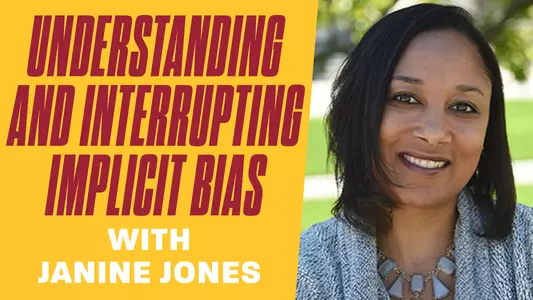
USC Hosts Educational Event on Implicit Bias and Microaggression
November 17, 2020 | USC Ripsit Blog, Black Lives Matter
The USC Athletics Black Lives Matter Action Team recently held its fourth monthly educational event in an effort to lead sustainable and transformative growth and to foster an environment within USC Athletics for Black student-athletes, coaches and staff that is free from racism, injustice and hate.
Janine Jones, a former professor at USC's Gould School of Law who is now the Director of Diversity, Equity and Inclusion at Harvard Westlake School, spoke to Trojan student-athletes and staff about implicit bias and microaggressions.
Jones defined implicit biases as attitudes or stereotypes that affect our understanding, actions and decisions in an unconscious manner. She shared that implicit biases are activated involuntary, without awareness or intentional control, and can be either positive or negative.
She added that only 10 percent of humans' thoughts are conscious, and the other 90 percent, which includes beliefs, emotions, habits, values, imagination, intuition and implicit biases, is subconscious.
"It is critically important that we spend the time to take [implicit biases] out of the subconscious and put them into the conscious," said Jones.
Jones shared many examples of implicit bias having real-world effects on behavior. For example, she described a study that showed doctors tend to under-prescribe pain medication to Black patients with injuries that are identical to non-Black patients. She also shared that employers are 50 percent more likely to call back people with white sounding names on their resumes.
Jones defined eight common categories of microaggressions and encouraged Trojans to identify and challenge their own biases:
Examples include asking people where they're really from, telling someone "You're pretty for an Asian girl," or asking a Black person if you can touch their hair.
Jones asked Trojans to reflect on their own biases and past microaggressions and begin to dismantle them.
She invoked political activist and author Angela Davis in her encouragement to the Trojans.
"In a racist society it is not enough to be non-racist. We must be anti-racist."
Janine Jones, a former professor at USC's Gould School of Law who is now the Director of Diversity, Equity and Inclusion at Harvard Westlake School, spoke to Trojan student-athletes and staff about implicit bias and microaggressions.
Jones defined implicit biases as attitudes or stereotypes that affect our understanding, actions and decisions in an unconscious manner. She shared that implicit biases are activated involuntary, without awareness or intentional control, and can be either positive or negative.
She added that only 10 percent of humans' thoughts are conscious, and the other 90 percent, which includes beliefs, emotions, habits, values, imagination, intuition and implicit biases, is subconscious.
"It is critically important that we spend the time to take [implicit biases] out of the subconscious and put them into the conscious," said Jones.
Jones shared many examples of implicit bias having real-world effects on behavior. For example, she described a study that showed doctors tend to under-prescribe pain medication to Black patients with injuries that are identical to non-Black patients. She also shared that employers are 50 percent more likely to call back people with white sounding names on their resumes.
Jones defined eight common categories of microaggressions and encouraged Trojans to identify and challenge their own biases:
- Affinity (predilection to be more comfortable surrounding ourselves with people that are similar to us)
- Assimilation (coping mechanism used subconsciously by subcultural members to fit in with the dominant culture i.e. pretending to be interested in something you're not)
- Conformity (changing your opinion when you are told that a group has a different opinion)
- Confirmation (we seek out information to confirm what we already believe or discount, downplay, ignore information that doesn't agree with what we believe)
- Halo/Horns (giving the benefit of the doubt to people that you like, you don't give the benefit of the doubt to people you don't like)
- In Group (tendency to give preferential treatment to others perceived to be members of our own group)
- Status Quo (tendency to resist change and want to maintain the status quo)
- Stereotype (expectation for members of a group to have certain characteristics we attribute to the group without knowing anything about the individual)
Examples include asking people where they're really from, telling someone "You're pretty for an Asian girl," or asking a Black person if you can touch their hair.
Jones asked Trojans to reflect on their own biases and past microaggressions and begin to dismantle them.
She invoked political activist and author Angela Davis in her encouragement to the Trojans.
"In a racist society it is not enough to be non-racist. We must be anti-racist."
Thursday, September 10
Wednesday, September 09
Wednesday, September 09
Wednesday, September 09