University Southern California Trojans


Players Mentioned

Throws
/ Track & Field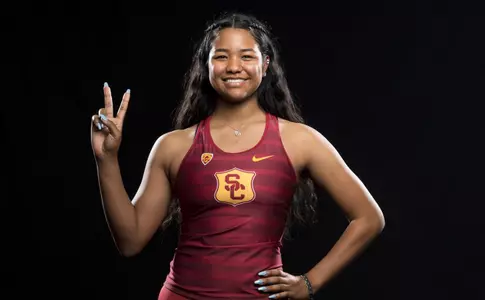
Getting To Know Joy McArthur
April 26, 2018 | Track & Field, Features
Hammer thrower Joy McArthur is in her freshman season on the USC track and field team and has already posted the 10th-farthest throw in school history of 201-9 (61.49m). McArthur and her teammates are entering the crunch time of the season now with the annual Dual Meet vs. UCLA this weekend, followed by the Pac-12 Championships, NCAA West Regional and NCAA Championships. We sat down recently with McArthur to discuss her first season as a Trojan and how she chose USC.
Q: What made you choose to come to USC?
JM: I started throwing the hammer my junior year, the coach that I met, he was a junior college coach, so he introduced me to hammer, originally I was just doing discus and shot put because that is what they had in high school. The coach there knew coach Dan (Lange) and I knew I wanted to come here to throw. There was no other school I was looking into. I was just training so I could get to here. My main focus was to get my marks and then come here.
Q: What are you majoring in at USC?
JM: I'm changing from a business major to a communications major. I want to stay in sports media, that is what interests me the most. I wanted to try business to see if it was a good fit with me and it didn't fit that well, so I'm just going to try and get into the school of Annenberg and see what that brings.
Q: How did you get into the hammer as a junior in high school?
JM: My junior year a lot happened. I switched schools. Things with that track program didn't work, so I spent all of my time training in hammer. The coach I was with continued training me in hammer and pushed the other two aside because he said I had potential in hammer, so let's train this and see where it goes.
Q: Did you feel like a natural when you first picked up the hammer?
JM: No, no…at the beginning, the first couple of months, it wasn't what I wanted because it is so hard to learn, but it is natural for learning an event at first it is not going to be easy, especially the hammer because it is so much about technique. Every day I was like, let's take it step by step, at that point I wasn't even worried about college. I never thought I'd be here with hammer. I thought of it as just something to do.
Q: What other sports did you participate while growing up?
JM: Growing up I played a lot of tennis, I tried soccer, I did a little bit of volleyball, but the two main sports were tennis and basketball.
Q: Anything from those sports that helps you with the hammer throw?
JM: No, but the coaches I had for both of those sports were inspirational for me. My tennis coach really helped me become who I am now. I don't really take anything from tennis into hammer. Its been awhile, maybe agility. All the training I did as a kid up until high school, I can apply it to my athleticism now, but basketball, no.
Q: Do you have any goals for yourself this season?
JM: I just want to be healthy, because coming off injuries it was a little bit rough at the beginning because I got injured (back) at the end of my junior year and in the middle of my senior year, so I was just out. So I'm trying to better myself and be positive and train myself so I won't get injured again and stay healthy. For my numbers, I don't really have any goals. I just want to the best for myself and if I keep training the way I am, those goal will just come itself.
Q: What are your goals for the team?
JM: I think we have a really good team, so I think we can place at NCAAs. If I can take care of myself, I can contribute. I want to make sure everyone gets what they deserve for their hard work. I'm really glad that I have the teammates that I have now.
Q: What is the hardest part of the transition from high school to college?
JM: I feel a lot of people say this, but it is the schooling. In high school it is a lot easier, school wasn't as tough for me. I think just staying on top of your homework and things like that at first was a little rough, but other than that, I think I have transitioned pretty well.
Q: Do you have any pre-meet rituals?
JM: No. I think I just try and stay calm. When I wake up in the morning I just stay calm, but I don't do anything specific like I eat this in the morning, I do this next in the morning. No superstitious stuff. I just try and focus on what I did in practice and try and visualize before the meet.
Q: What was competing at the Under 20 Championships experience like?
JM: It was the first really big meet for me. The Juniors meet was big, but when you went to Worlds, there is a whole bunch of teams and everybody was good. It was really a new experience. I had a great experience with the whole team. I didn't do as well as I should have performed, but it was okay with me because it was one of the few meets I had been to, then my coach wasn't there, so I clearly did not know what I was doing, but I just know I had a good time. I want to try and make it to the next U20s this year.
Q: How do the meets this year compare to in high school?
JM: When I was in high school, I would basically have to go to collegiate meets because there was no high school hammer, so I was facing college girls who were throwing farther than me. When I compete, I usually think about myself. I have to be better than myself, I'm competing against myself, so usually when I compete I don't really watch my competitors until I'm done throwing because it will probably affect me. I trying to stay focused on what I'm doing and if I'm watching somebody else there is nothing else going on in my head.
Q: What are your future goals?
JM: I'd like to stay somewhere within athletics because I really love sports. If I wasn't an athlete, I don't know what I would do now. I would like to continue my future in hammer, so I will continue to train, but after that, I'll have to see what I'd like to do as I transition into communications.
Q: What made you choose to come to USC?
JM: I started throwing the hammer my junior year, the coach that I met, he was a junior college coach, so he introduced me to hammer, originally I was just doing discus and shot put because that is what they had in high school. The coach there knew coach Dan (Lange) and I knew I wanted to come here to throw. There was no other school I was looking into. I was just training so I could get to here. My main focus was to get my marks and then come here.
Q: What are you majoring in at USC?
JM: I'm changing from a business major to a communications major. I want to stay in sports media, that is what interests me the most. I wanted to try business to see if it was a good fit with me and it didn't fit that well, so I'm just going to try and get into the school of Annenberg and see what that brings.
Q: How did you get into the hammer as a junior in high school?
JM: My junior year a lot happened. I switched schools. Things with that track program didn't work, so I spent all of my time training in hammer. The coach I was with continued training me in hammer and pushed the other two aside because he said I had potential in hammer, so let's train this and see where it goes.
Q: Did you feel like a natural when you first picked up the hammer?
JM: No, no…at the beginning, the first couple of months, it wasn't what I wanted because it is so hard to learn, but it is natural for learning an event at first it is not going to be easy, especially the hammer because it is so much about technique. Every day I was like, let's take it step by step, at that point I wasn't even worried about college. I never thought I'd be here with hammer. I thought of it as just something to do.
Q: What other sports did you participate while growing up?
JM: Growing up I played a lot of tennis, I tried soccer, I did a little bit of volleyball, but the two main sports were tennis and basketball.
Q: Anything from those sports that helps you with the hammer throw?
JM: No, but the coaches I had for both of those sports were inspirational for me. My tennis coach really helped me become who I am now. I don't really take anything from tennis into hammer. Its been awhile, maybe agility. All the training I did as a kid up until high school, I can apply it to my athleticism now, but basketball, no.
Q: Do you have any goals for yourself this season?
JM: I just want to be healthy, because coming off injuries it was a little bit rough at the beginning because I got injured (back) at the end of my junior year and in the middle of my senior year, so I was just out. So I'm trying to better myself and be positive and train myself so I won't get injured again and stay healthy. For my numbers, I don't really have any goals. I just want to the best for myself and if I keep training the way I am, those goal will just come itself.
Q: What are your goals for the team?
JM: I think we have a really good team, so I think we can place at NCAAs. If I can take care of myself, I can contribute. I want to make sure everyone gets what they deserve for their hard work. I'm really glad that I have the teammates that I have now.
Q: What is the hardest part of the transition from high school to college?
JM: I feel a lot of people say this, but it is the schooling. In high school it is a lot easier, school wasn't as tough for me. I think just staying on top of your homework and things like that at first was a little rough, but other than that, I think I have transitioned pretty well.
Q: Do you have any pre-meet rituals?
JM: No. I think I just try and stay calm. When I wake up in the morning I just stay calm, but I don't do anything specific like I eat this in the morning, I do this next in the morning. No superstitious stuff. I just try and focus on what I did in practice and try and visualize before the meet.
Q: What was competing at the Under 20 Championships experience like?
JM: It was the first really big meet for me. The Juniors meet was big, but when you went to Worlds, there is a whole bunch of teams and everybody was good. It was really a new experience. I had a great experience with the whole team. I didn't do as well as I should have performed, but it was okay with me because it was one of the few meets I had been to, then my coach wasn't there, so I clearly did not know what I was doing, but I just know I had a good time. I want to try and make it to the next U20s this year.
Q: How do the meets this year compare to in high school?
JM: When I was in high school, I would basically have to go to collegiate meets because there was no high school hammer, so I was facing college girls who were throwing farther than me. When I compete, I usually think about myself. I have to be better than myself, I'm competing against myself, so usually when I compete I don't really watch my competitors until I'm done throwing because it will probably affect me. I trying to stay focused on what I'm doing and if I'm watching somebody else there is nothing else going on in my head.
Q: What are your future goals?
JM: I'd like to stay somewhere within athletics because I really love sports. If I wasn't an athlete, I don't know what I would do now. I would like to continue my future in hammer, so I will continue to train, but after that, I'll have to see what I'd like to do as I transition into communications.
Wednesday, June 17
Sunday, May 17
Thursday, May 14
Saturday, March 28